There are streets in Hanoi where bamboo rises higher than the people walking past them.
I found one by accident.
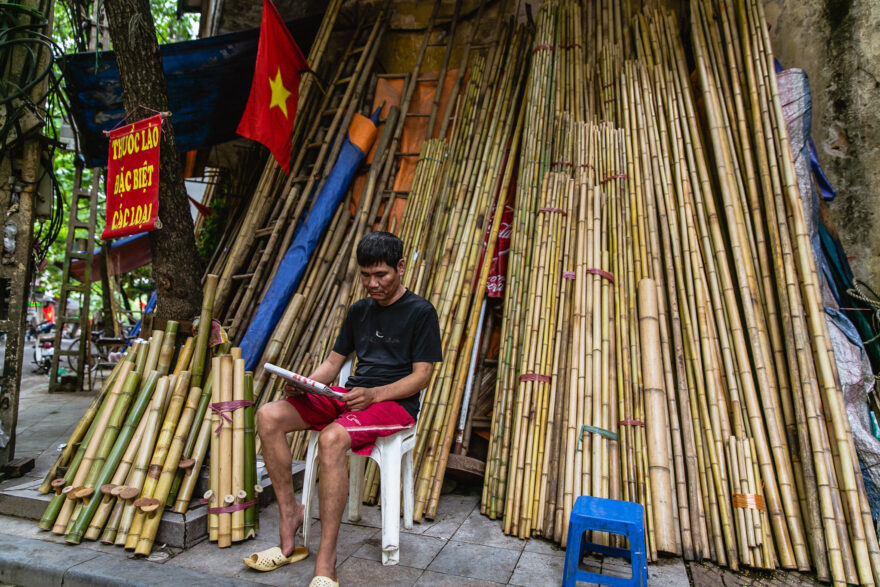
No maps had marked it. No travel blogs spoke of it. No guided tours stopped there. It was simply a narrow street lined with towering walls of bamboo pipes stacked against old buildings, the scent of tobacco lingering in the humid air of northern Vietnam.
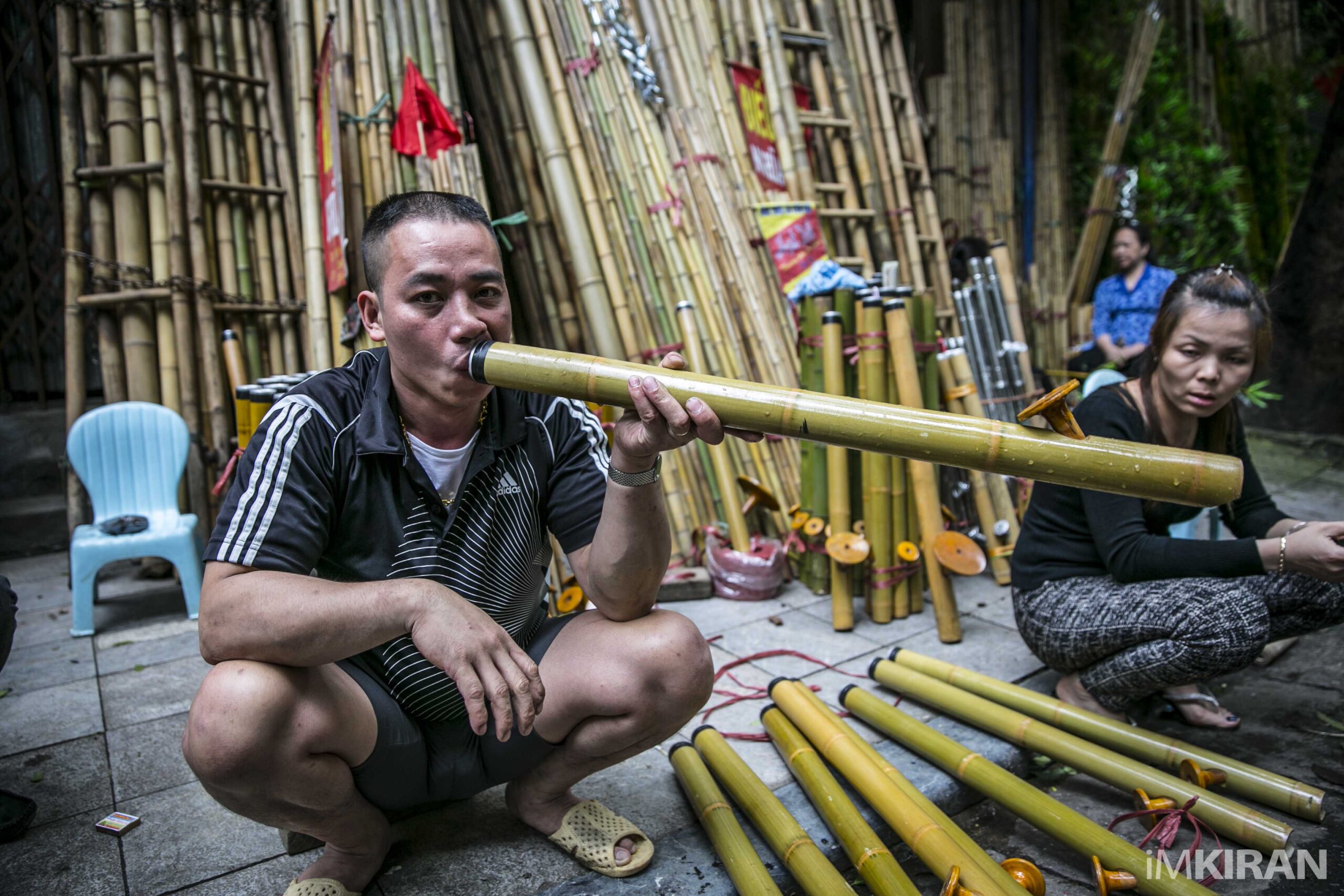
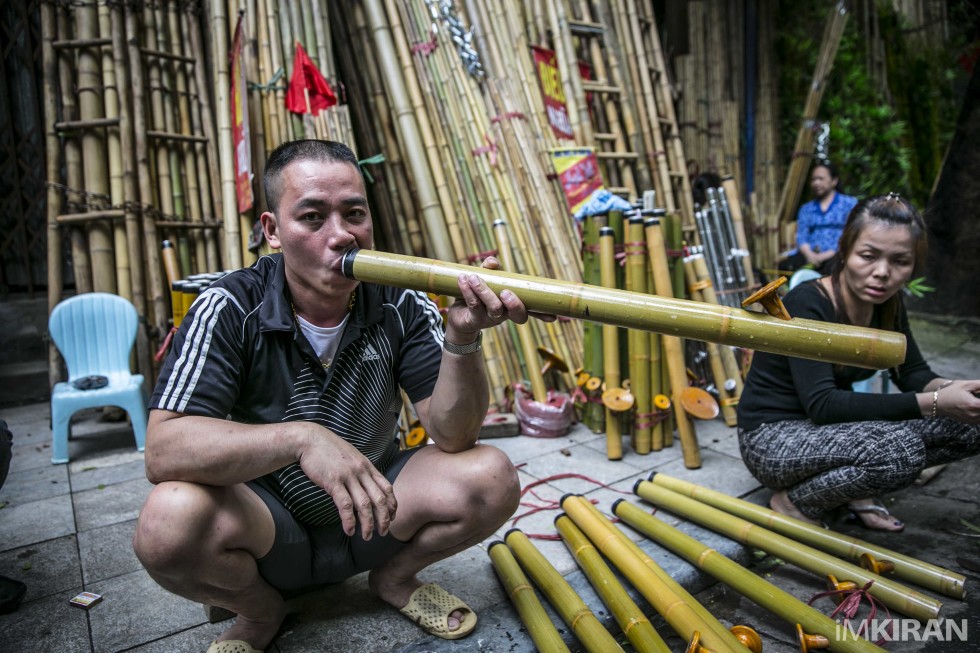
Men sat on small plastic stools smoking from long bamboo pipes as if time had never moved forward.
This was not a performance for tourists.
This was everyday Vietnam.
The pipe is known as a Điếu Cày, though many travellers simply call it the Vietnamese bamboo pipe. Locals often refer to the tobacco smoked inside as Thuốc Lào, a strong tobacco grown in northern Vietnam and smoked by farmers and labourers for generations.
The translation of Điếu Cày is often said to mean farmer’s pipe.
And after spending time in these streets, the name feels fitting.
For many years, this pipe accompanied farmers resting in rice fields after hours beneath the sun. It travelled on bicycles, sat beside market stalls and leaned against wooden houses in villages across the north.
Today, it survives in tea shops, street corners and hidden alleys of Hanoi.
Not because it became fashionable.
Because some traditions simply refuse to disappear.
What is a Vietnamese Bamboo Pipe?
The Vietnamese bamboo pipe works using water filtration.
A small amount of water sits inside the chamber while a pinch of Thuốc Lào tobacco is packed into a bowl attached near the base. The smoker inhales sharply and the smoke travels through the water before filling the bamboo chamber.
The resulting smoke is incredibly strong. Much stronger than cigarettes.
For first-time visitors, one inhale is often enough to understand why locals laugh before handing the pipe to foreigners.
The tobacco contains a high nicotine content and many first-timers experience dizziness after only a single puff. Locals who have smoked it for years often take deep inhalations without any visible reaction.
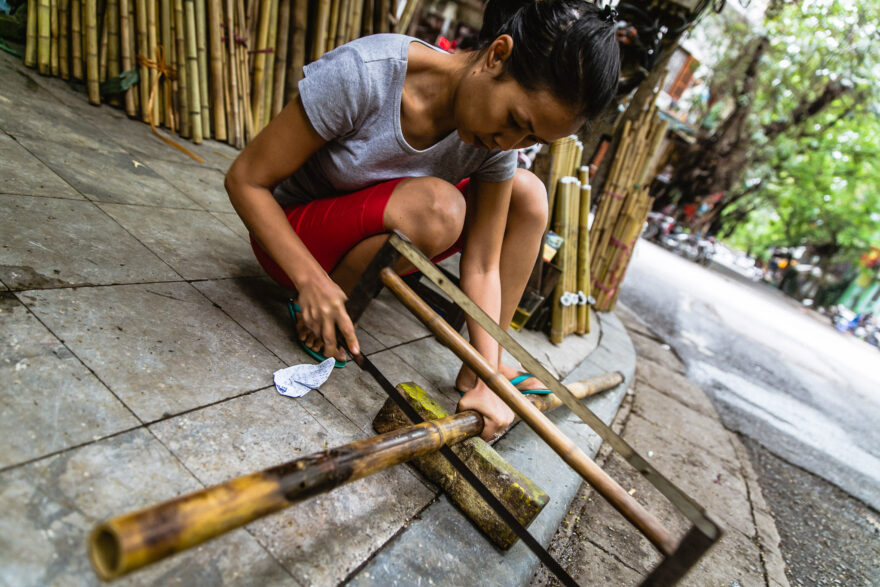
A Street Built Around Bamboo
What fascinated me more than the smoking itself was the ecosystem surrounding it. Entire shops existed purely for bamboo pipes.
Short pipes.
Long pipes.
Decorative pipes.
Portable pipes for farmers.
Large pipes for tea houses.
Bamboo poles leaned against walls waiting to become instruments of smoke and conversation.The street felt less like a marketplace and more like a workshop preserving a disappearing craft.
The sellers were not trying to convince anyone to buy.
They simply sat among their bamboo, waiting for customers who already understood what they had come for.
In a world of disposable products and mass production, there was something beautiful about that patience.
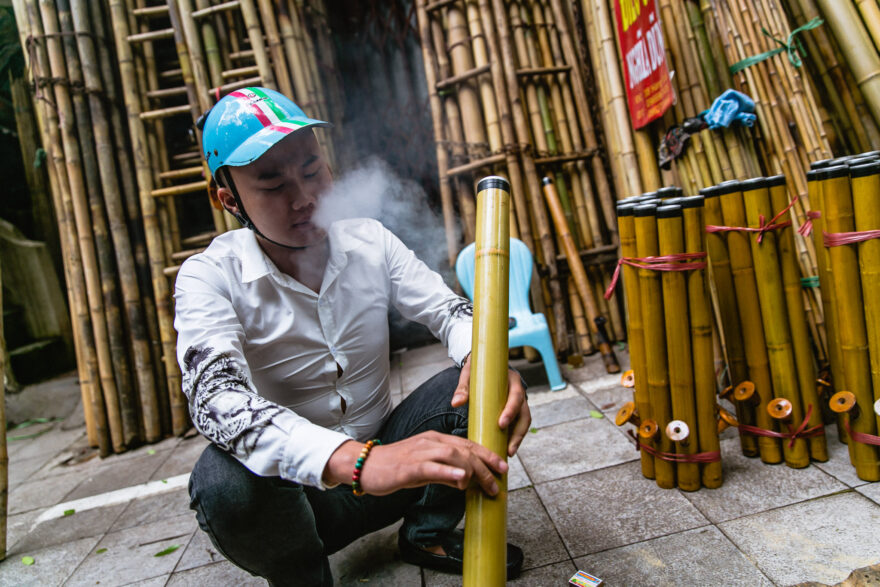
More Than Tobacco
For many Vietnamese men, smoking Thuốc Lào was never only about nicotine.
It was about pauses.
A moment after lunch.
A conversation between neighbours.
A break after work.
Tea poured into small glasses.
Stories exchanged under slow ceiling fans.
The bamboo pipe often sat in the middle of those moments.
For travellers rushing between Hanoi’s famous landmarks, these quieter rituals often tell more about Vietnam than monuments ever could.
The country lives in its small details.
In morning bowls of pho eaten standing up.
In plastic stools spilling onto pavements.
In old men playing chess beneath trees.
And sometimes, in a bamboo pipe resting against a wall.
Is It Safe For Travellers To Try?
Many visitors are curious and some decide to try Thuốc Lào while travelling through Vietnam. Locals will often warn you before your first puff.
Listen to them.
The tobacco is considerably stronger than most cigarettes and can cause coughing, dizziness and nausea in those unfamiliar with it. If you decide to try it, taking only a very small inhalation is usually more than enough for the experience.
For many travellers, photographing the ritual becomes more memorable than participating in it.
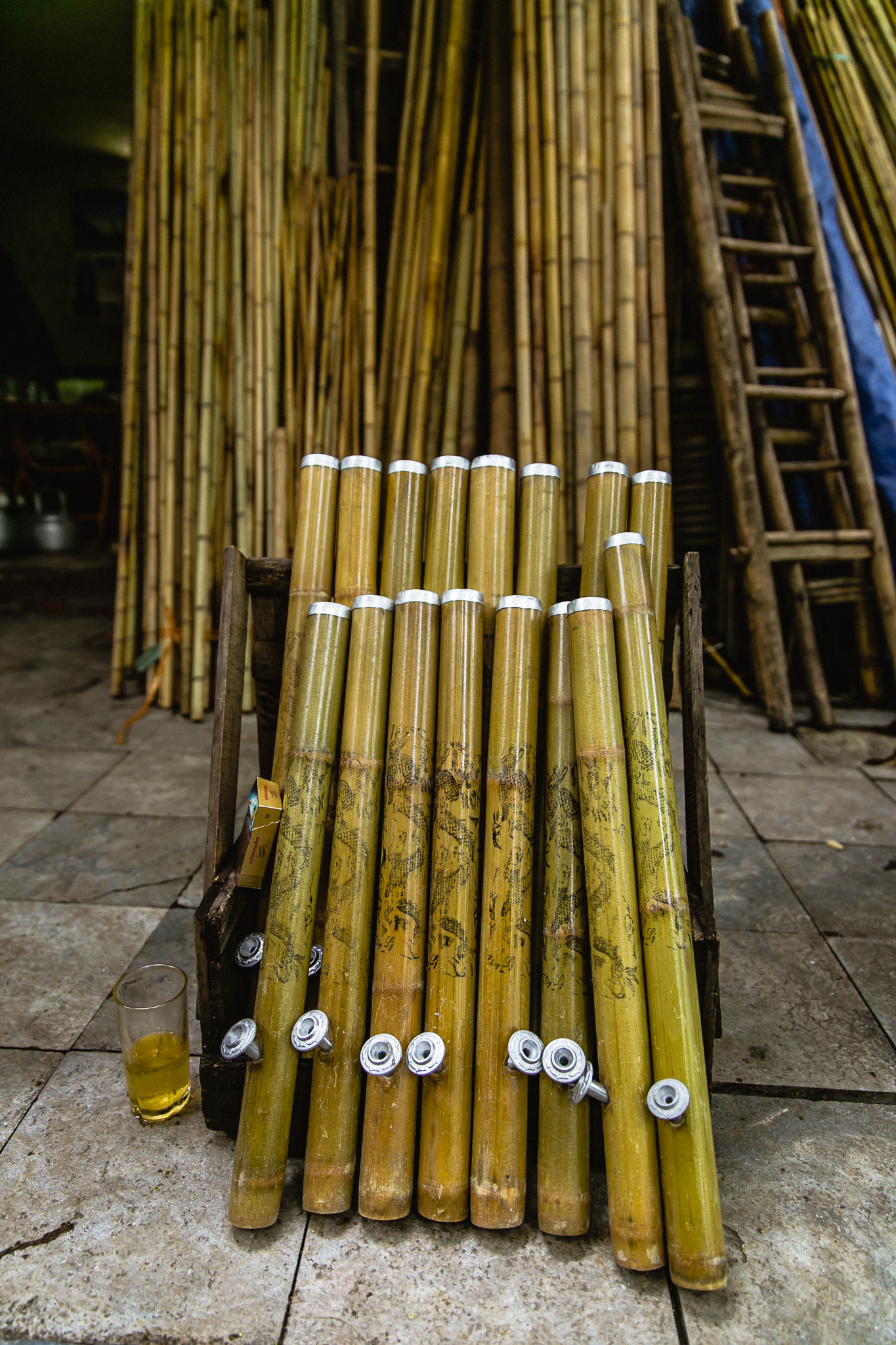
A Photographer’s Note
As photographers, we often chase festivals, mountains and iconic landmarks.
Yet some of the strongest stories hide in ordinary streets.
A man crouching beside a stack of bamboo.
Hands weathered from years of work.
A ritual repeated thousands of times.
No audience.
No performance.
Just life unfolding as it always has.
These are the photographs I remember long after I return home.
Not because they were spectacular.
Because they were real.
Walking through Hanoi, I had expected temples, scooters and bowls of steaming noodles.
I did not expect an entire street dedicated to bamboo pipes.
But perhaps that is exactly why travel still matters.
The world still holds corners that cannot be found on itineraries.
You simply have to keep walking.
—
Photographed in Hanoi, Vietnam.
Words and photographs by Kiran Kreer.
Bamboo Pipes of Hanoi, Vietnam